ESA PROSPECT: the ground platform for a drill on the Moon's south pole

The Challenge

PROSPECT will drill up to a metre into the lunar surface near the south pole, collect samples and heat them in a miniature laboratory to look for water ice and other volatiles. It will also test whether oxygen can be extracted from lunar soil, a resource future crews will need. Launch is planned for 2027.

Once it lands, the payload has about ten Earth days of sunlight to do its science. It is not designed to survive the lunar night, and nothing can be repaired. Commands and results pass between the European team at ESTEC in Noordwijk and the Intuitive Machines control centre in Houston, with limited visibility into the commercial lander itself. Every hour of that window counts, so the ground segment has to stay up throughout and be qualified long before launch.

ESA needed a complete PROSPECT Operations Centre (POC) at ESTEC: a control room, plus an IT backend to host the Ground Segment Software, monitoring and secure links to partners. The backend had to run on ESA's own cloud (ESA Cloud IaaS), use only open-source software, support GPU workloads and reach 99.9% availability during operations. It also had to host further missions later and keep working from portable units if the central facility was out of reach.

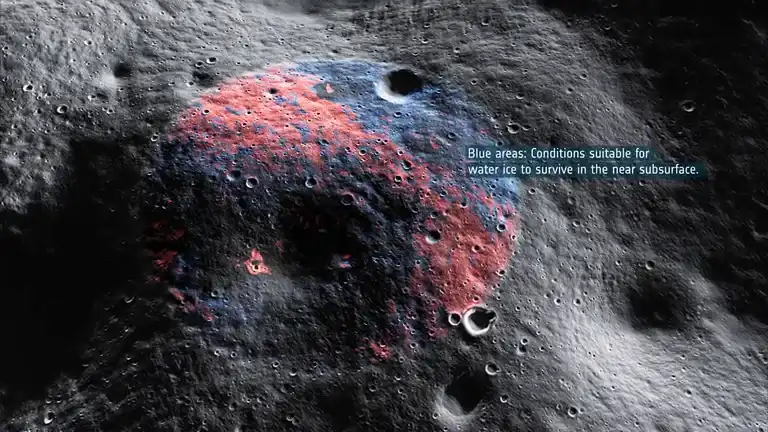
Map of the lunar south polar region with blue areas where water ice could survive just below the surface
Blue areas near the lunar south pole: conditions where water ice could survive just below the surface. Image: ESA
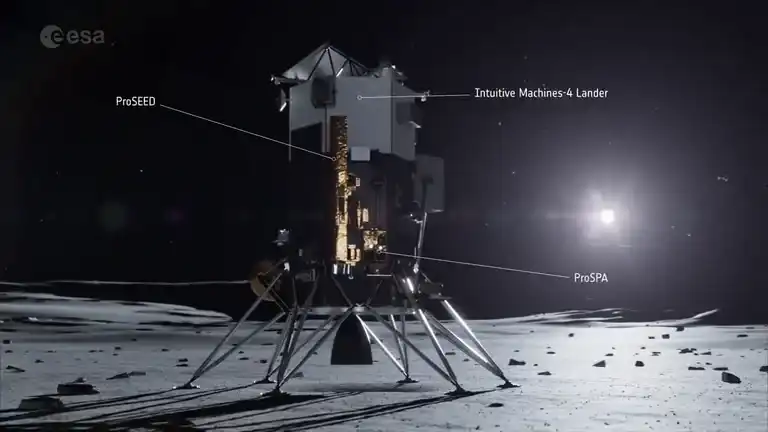
Intuitive Machines Nova-C lander on the Moon with the ProSEED drill and ProSPA laboratory labelled
PROSPECT on the Intuitive Machines IM-4 lander: the ProSEED drill and the ProSPA laboratory. Image: ESA

The Solution

Our role in the consortium. Telespazio Benelux leads the project as prime contractor. Astro42 leads two work packages: backend compute, storage and network, and the multi-mission platform. We also contribute to the Ground Segment Software deployment, the secure external interfaces, operations preparation and project documentation. Every partner is credited at the end of this page.

Highly available Kubernetes on ESA's cloud. We are deploying a cluster with at least three control plane nodes, GPU worker nodes exposed through the NVIDIA device plugin with quotas, and persistent storage on NFS-CSI and MinIO. Keycloak handles identity over OIDC and LDAP, with Entra ID federation.

Segmented and hardened. The network is split into VLANs on private RFC1918 addressing, with governed firewall rules and an isolated administration network. Hosts follow CIS Level 1 hardening. Prometheus, Grafana and OpenSearch provide metrics, central logging and alerting, so the operations team can see the state of the platform throughout the surface window.

Everything as code. Terraform, Ansible and Helm provision every layer, so the platform can be rebuilt from scratch and audited line by line. The CI/CD pipeline pulls container images by digest and scans them with Trivy.

One platform for many missions. Each mission gets its own namespace and resource quota, while identity, monitoring, storage and CI/CD stay shared and centrally governed. ESA can onboard the next mission without touching PROSPECT operations.

A control centre in a case. Two POC-in-a-Box units run the core services on lightweight K3s clusters, with offline Keycloak credential caching, NTP hold-over and a local registry mirror. They keep operations going if the central facility is unavailable and give the mission a self-contained presence at the US site.

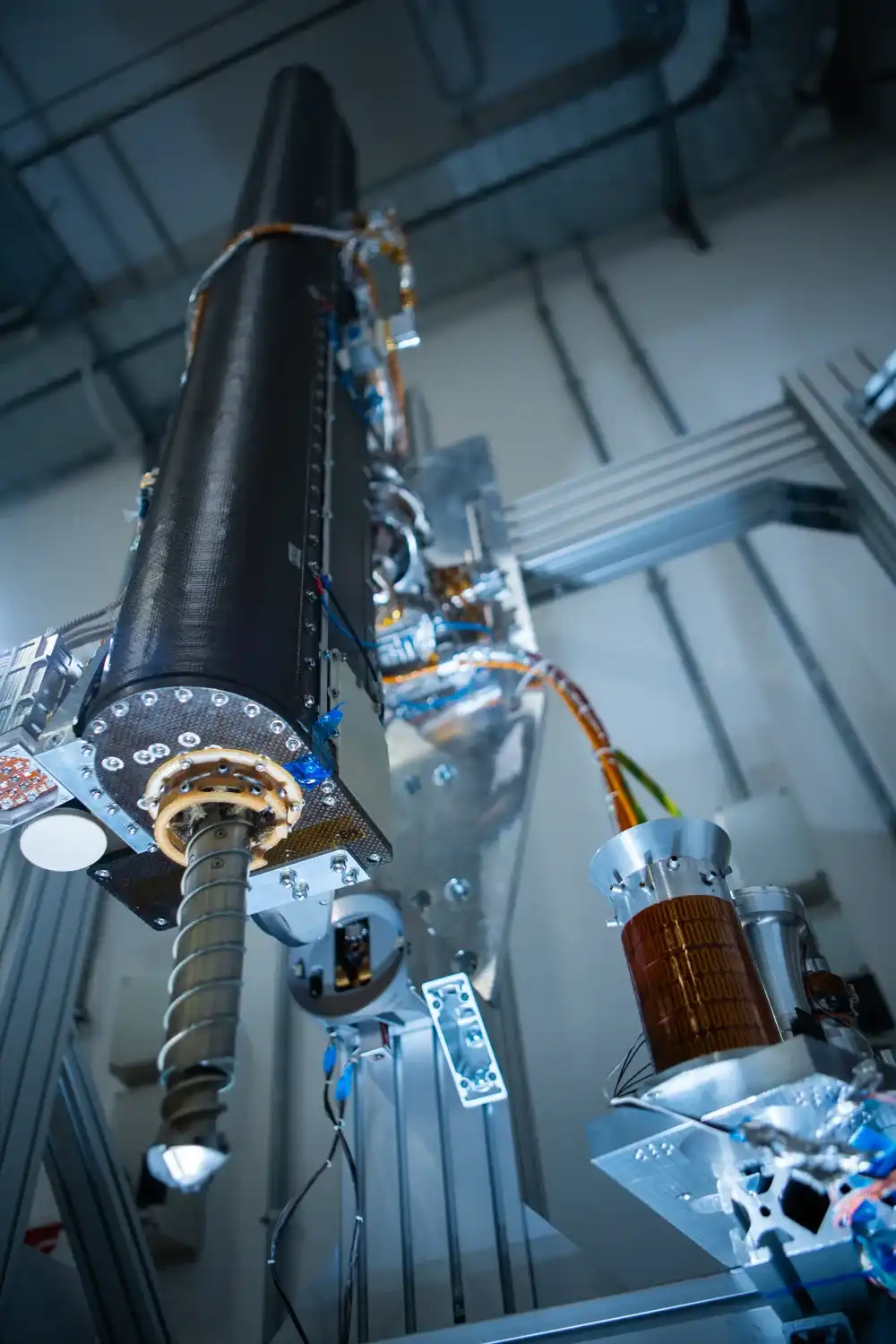
The PROSPECT robotic drill in a clean room, with its auger extended below the drill housing
The PROSPECT drill that the operations centre will command from ESTEC. Image: Leonardo

The Result

This is an active engagement. The contract is in execution and the project is working through its Preliminary and Critical Design Reviews. Next, the control room and backend platform are installed at ESTEC, ready to receive the mission software and reference hardware. From there the team works toward the Ground Segment Readiness Qualification Review, then supports operations through the IM-4 launch and the surface mission until contract close-out.

We designed the platform as a multi-mission foundation from day one, so ESA can host future missions on the same infrastructure with little onboarding effort. Open-source components and infrastructure as code keep every layer reproducible and auditable. The POC-in-a-Box units give the mission a fallback that runs without the central facility.

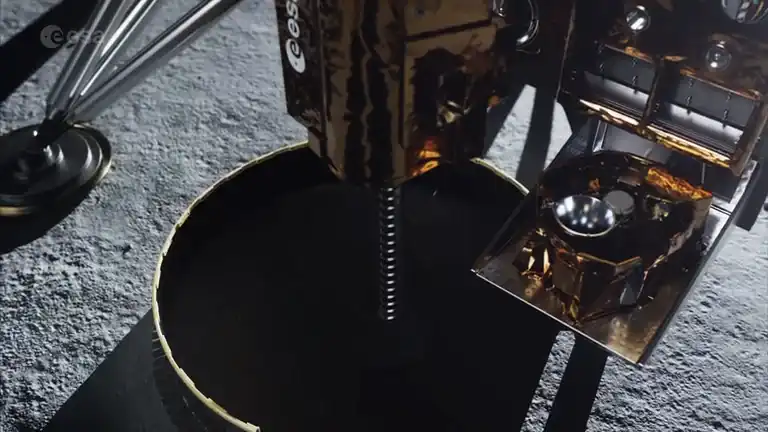
Cutaway animation of the PROSPECT drill boring into the lunar regolith beneath the lander
The drill reaches up to a metre below the surface to collect samples for analysis. Image: ESA

Project tech stack

Kubernetes

K3s

Helm

Terraform

Ansible

Prometheus

Grafana

OpenSearch

Keycloak

MinIO

Trivy

NVIDIA GPU

Ubuntu

Rocky Linux

Long-term wins

A ground platform ESA can reuse for future missions with little onboarding effort
Highly available, fully open-source infrastructure on ESA's own cloud, defined as repeatable and auditable code
Portable POC-in-a-Box units that keep operations running away from the central facility
Clear separation between missions, with shared identity, monitoring and CI/CD under central governance

Mission partners

European Space Agency (ESA): customer. PROSPECT is managed by ESA's Directorate of Human and Robotic Exploration as part of the Exploration Envelope Programme (E3P). The operations centre is delivered to ESTEC in Noordwijk.

Telespazio Benelux: prime contractor and consortium lead. Project and systems engineering management, design of the operations control room, secure interfaces to Intuitive Machines, integration of mission hardware and operations preparation.

EarthLab Luxembourg: deploys and integrates the Ground Segment Software on the platform and provides continuous monitoring and maintenance.

Astro42: backend compute, storage and network, the multi-mission platform and the POC-in-a-Box units.

Leonardo: prime contractor for the PROSPECT payload, technical lead for the ProSEED drill and provider of the Ground Segment Software.

The Open University: leads development of the ProSPA analysis laboratory.

Intuitive Machines: builds and operates the Nova-C lander that carries PROSPECT to the Moon.

NASA: flies the payload under its Commercial Lunar Payload Services (CLPS) programme.

Mission animation stills: ESA. Drill photograph: Leonardo.