















What we build
Earth Observation
and GIS
Our in-house EO team turns satellite data into maps, dashboards and reports that people act on. Past work includes InSAR ground-motion monitoring at the Giza Pyramids, sea-level-rise flood maps for the Nile Delta and seagrass monitoring for coastal restoration in Scotland.
Artificial
Intelligence
Machine learning for space data and control problems. Recent examples: building segmentation in thermal satellite imagery for ESA's MELT-B project, and a reinforcement-learning controller that keeps microscope tips stable for Space Needle.
Mission software and platforms
Operator dashboards, mission planning tools and SaaS platforms for satellite and Earth observation companies, from the interface down to the cloud infrastructure. Recent builds include Luna Space's operations platform, SpaceCrop's irrigation app and the platform behind ESA's MELT-B project.
Building the ground segment for a European Moon mission
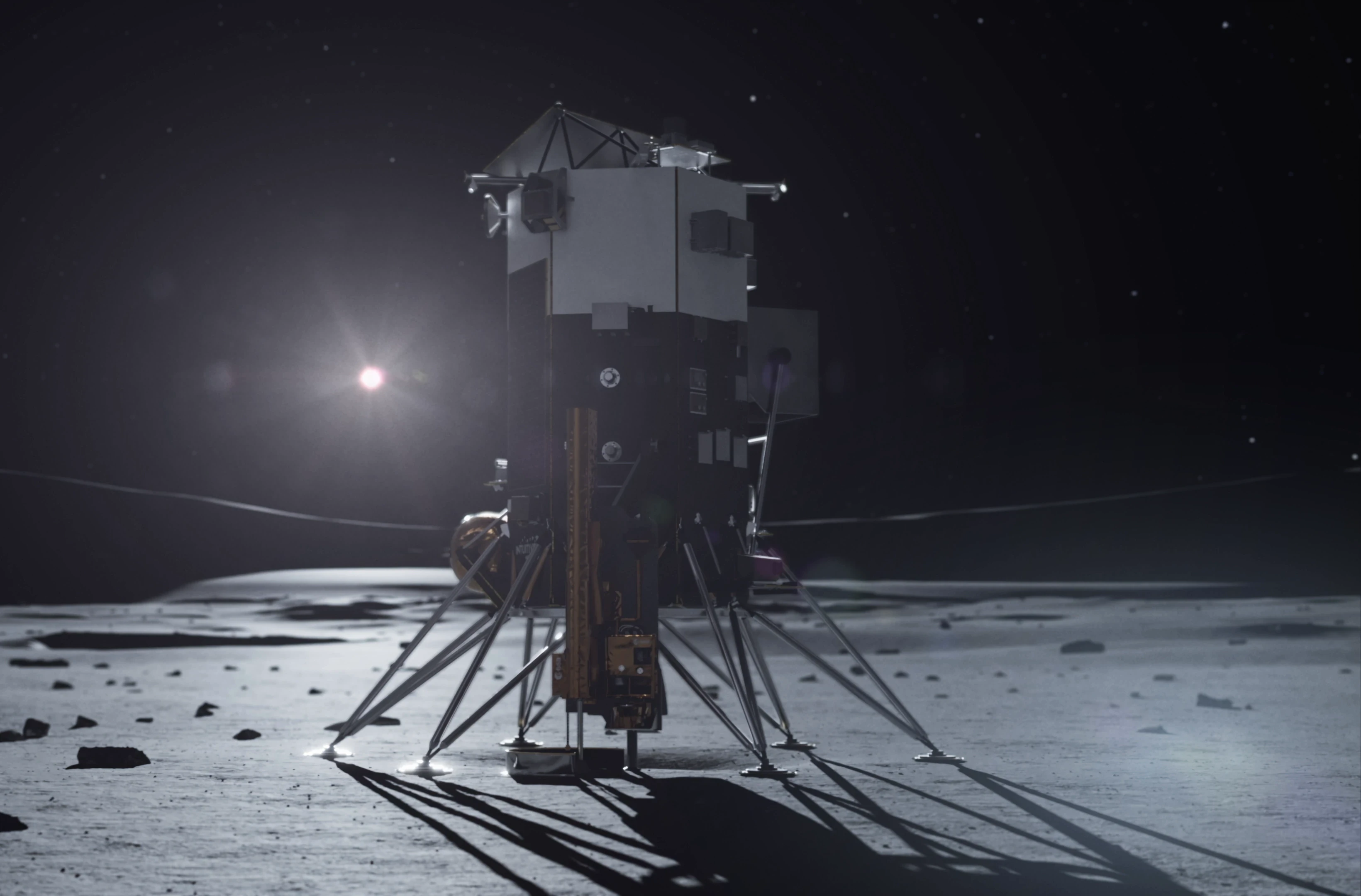
ESA's PROSPECT payload will drill into the lunar surface near the south pole and search for water ice. Once it lands, it has only a few days of sunlight to do its science, so the ground systems behind it have to be ready and qualified long before launch. In a consortium led by Telespazio Benelux, we lead the backend of the PROSPECT Operations Centre at ESA's ESTEC site in the Netherlands.
- Customer
- European Space Agency
- Prime contractor
- Telespazio Benelux
- Our role
- Backend compute, storage, network and multi-mission platform
- Mission
- Intuitive Machines IM-4, launch planned for 2027
- Highly available Kubernetes on ESA's cloudGPU compute for science processing, backed-up storage and full monitoring, all defined as code.
- One platform for many missionsEach mission runs in its own isolated space, so future missions can be onboarded without a rebuild.
- A control centre in a caseTwo portable POC-in-a-Box units keep operations running at a partner site if the link to Europe drops.
How a project runs
From first call to working software, with something to review every two weeks


Scope it
We start with who will use the software and what it has to help them do. Then we write a requirement specification for the smallest version worth building and cut everything else. On ESA work, we map it to the statement of work and the deliverables list.
Design it
Short workshops turn the requirements into user flows and wireframes you can click through before any code exists. In parallel we choose the architecture and infrastructure, so the interface and the system behind it are designed together.
Build it
We develop in two-week sprints and demo working software at the end of each one. Your feedback goes into the next sprint, so nothing at handover comes as a surprise.
Highlighted projects

MELT-B
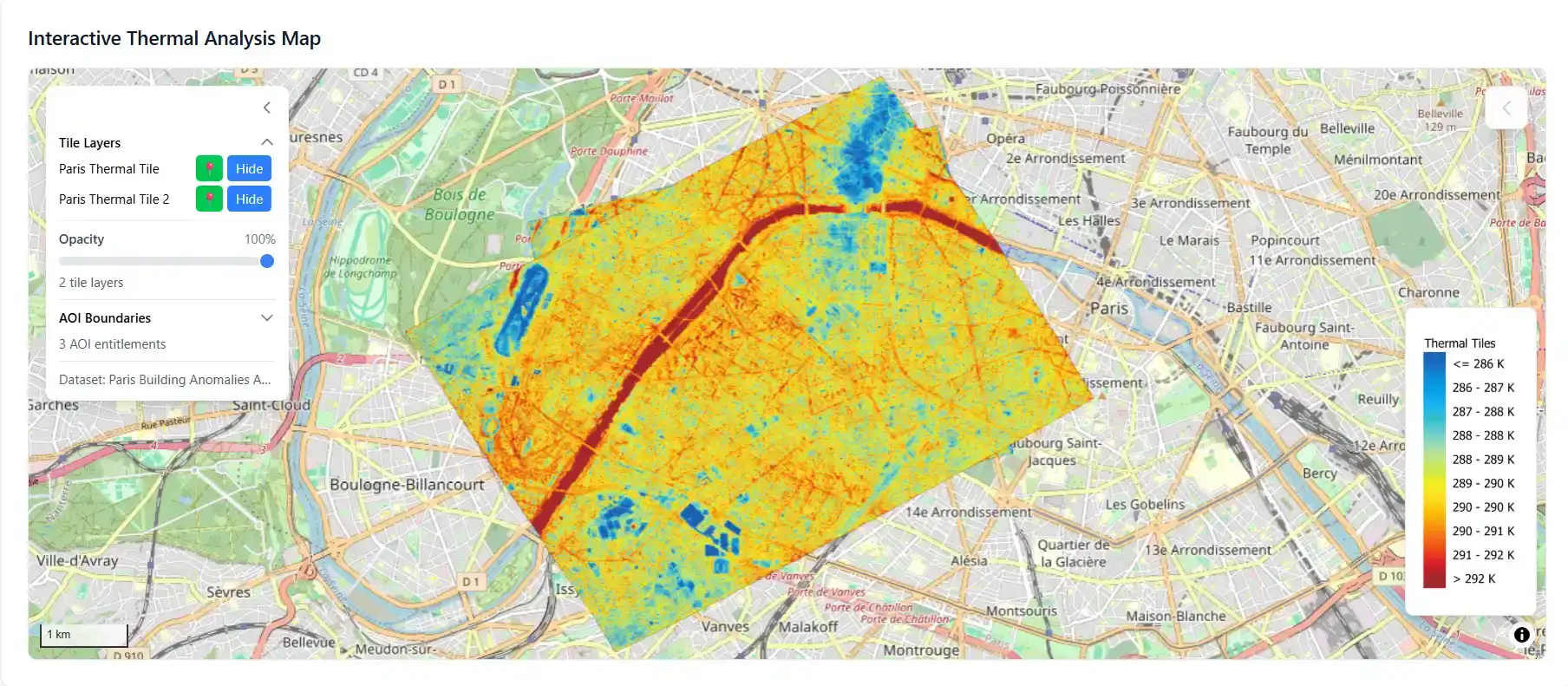
Commissioned by the European Space Agency: night-time thermal satellite imagery used to find the buildings that lose the most heat.

LunaSpace
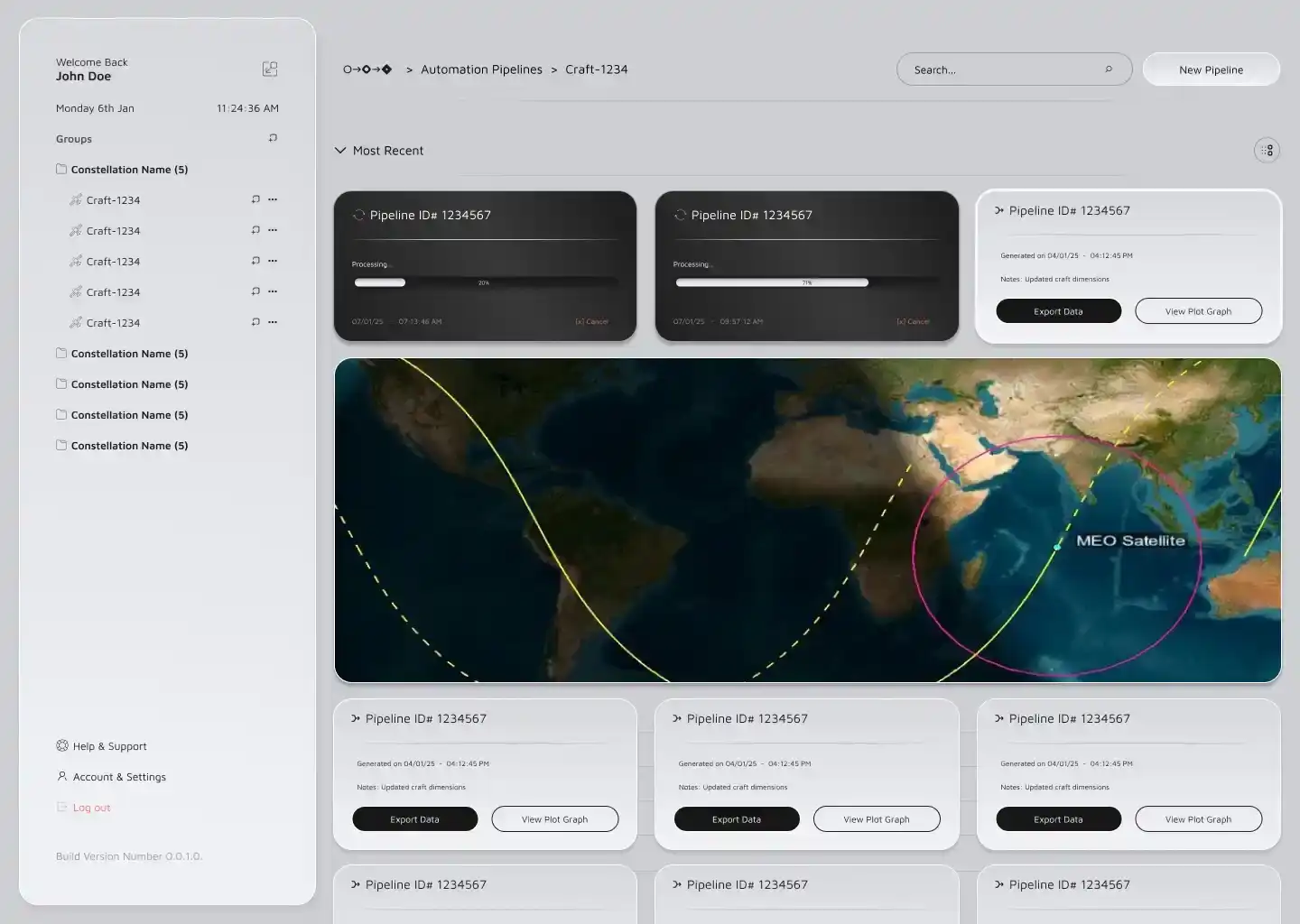
SaaS solution to automate mission operations for small satellite constellation operators.


Mission Operation Centre
Supporting Next-Gen CubeSat Missions with Tailored Ground Segment Software
Why space teams work with us


The Astro42 team at work
We speak the language of space
You don't need to waste time explaining basic industry terms to us. If you say LEO, we know you're not talking about your star sign.
We know how ESA projects run
We have delivered ESA contracts as prime and as subcontractor. Statements of work, milestone reviews and PSS forms are routine for us, so your consortium does not have to teach us the process.
We build what your users need
We don't just follow a spec. We ask who will use the software and what problem it solves, then build that. Our founder has mentored around 300 space startups, so product thinking comes as standard.
Hungarian and UK companies, one team
Our team works across Hungary and the UK, and you can contract with our Hungarian or our UK company. That helps ESA consortia balancing geographic return, and clients who need a UK supplier.
What our clients say


“We were most impressed with how flexible and accommodating they were, and how relaxed they were about approaching the project and any problems we had - nothing was ever a problem for them to do or figure out”


“The unique combination of their business experience with an excellent understanding of science, engineering and technology as well as their extensive knowledge of the space industry makes them exceptional experts in the sector.”

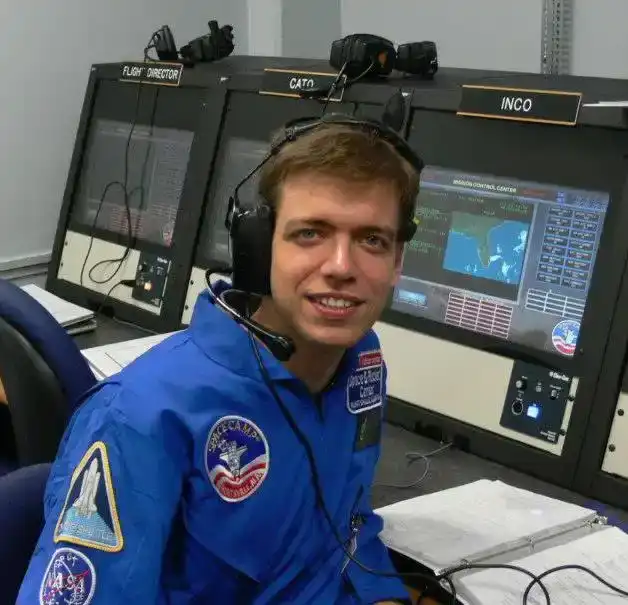
“They are efficient, effective, and collaborative to work with. We were able to deliver our software to the users on the desired timeline. They were an extended technical support team to us.”


There is space for conversation.
Tell us what you're building. In 30 minutes we'll talk through how we would approach it and whether we're the right team, and you'll get a short written plan afterwards either way.
Book a free 30‑minute call