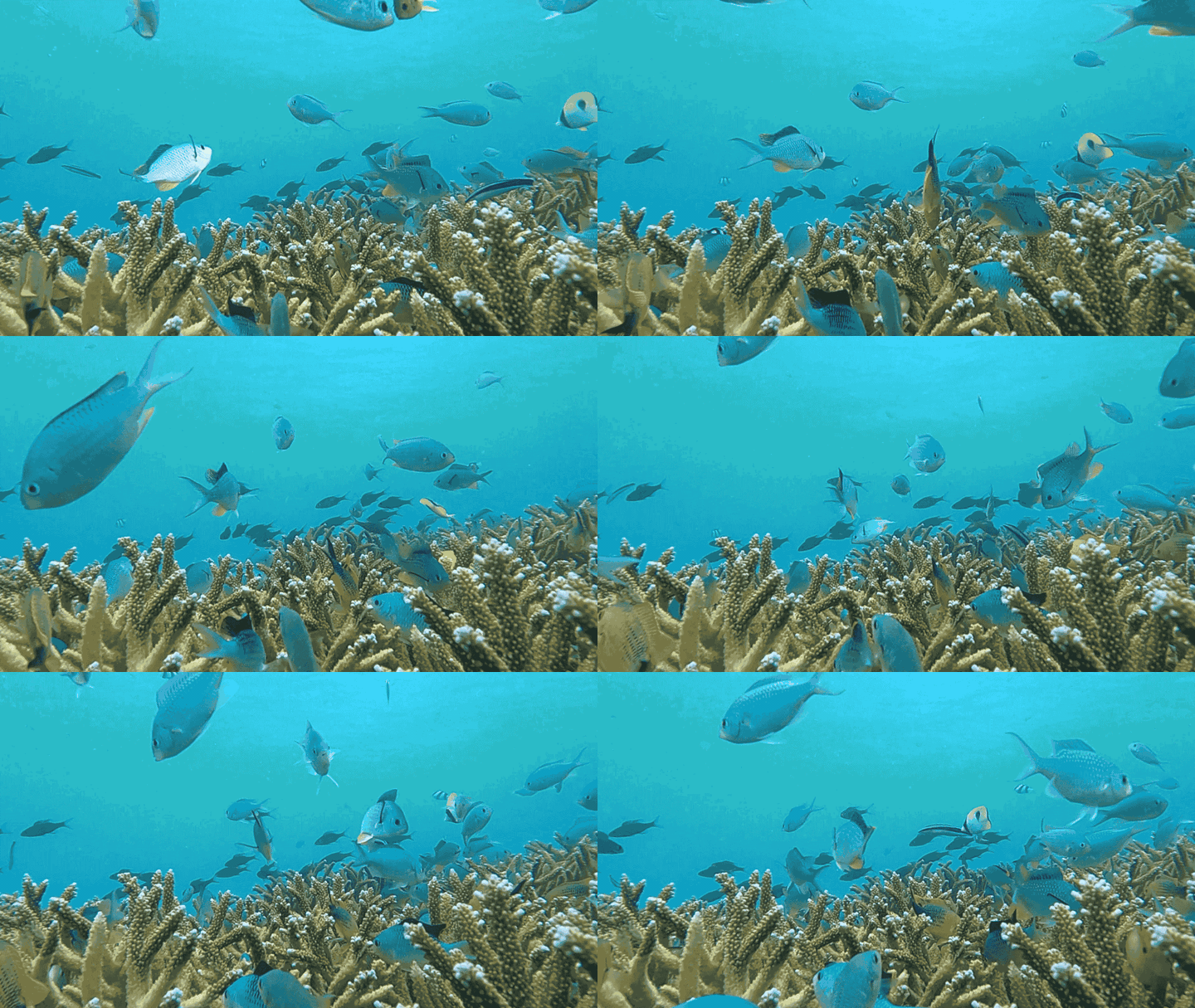
Artificial reef restoration is growing rapidly across European waters, but the tools to measure whether these investments are actually working have not kept pace. Reef performance is typically judged from dive surveys that arrive months apart, cost a small fortune to schedule, and produce snapshots that miss the continuous environmental dynamics that determine whether a reef thrives or fails.
At the same time, fisheries compliance teams operate from an entirely separate set of tools. Vessel activity is tracked in one system, marine protected area boundaries in another, and biodiversity data in a third. There is no shared framework that connects reef health evidence with vessel pressure data.
To address this challenge, SensFish Ltd, a UK marine intelligence SME, is developing proprietary environmental intelligence infrastructure for fisheries, coastal ecosystems, and marine restoration applications.
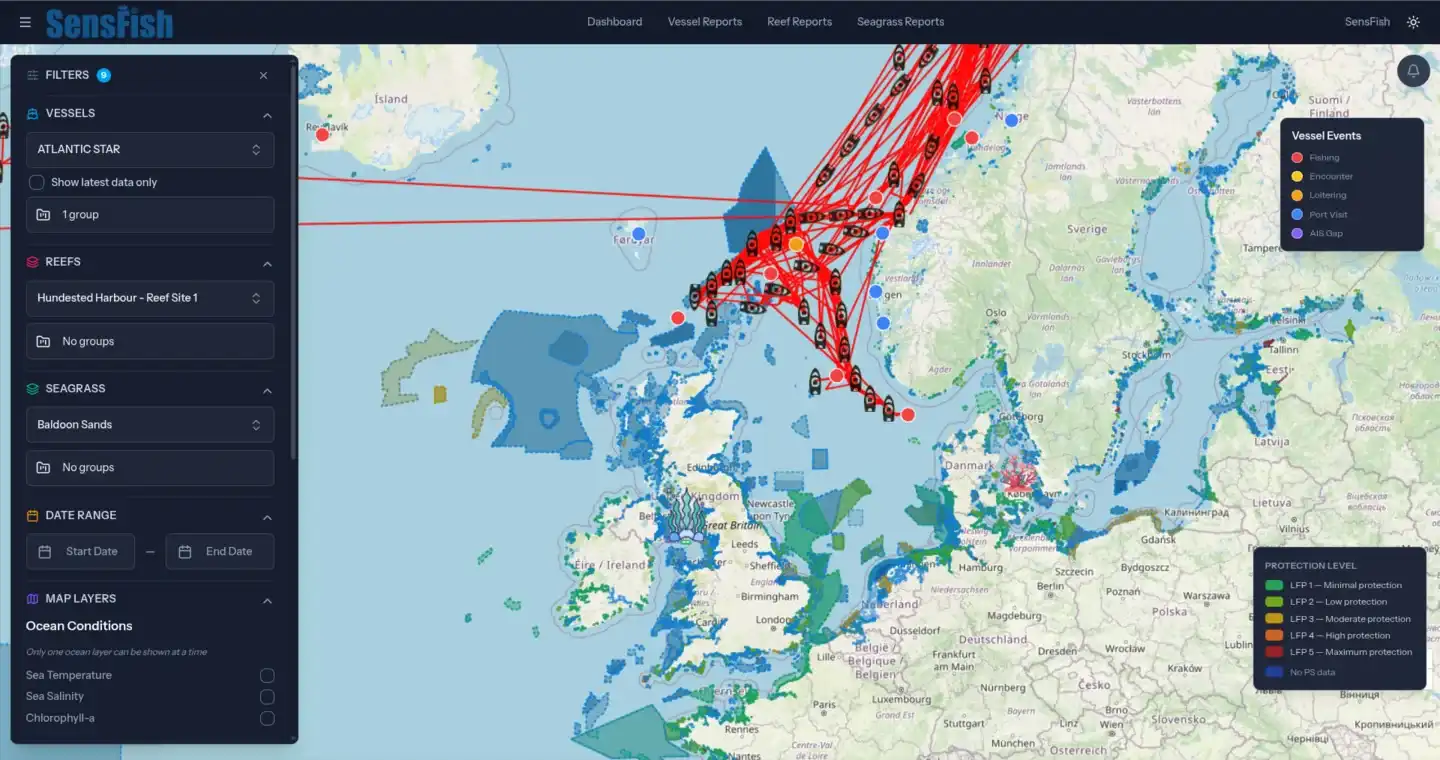
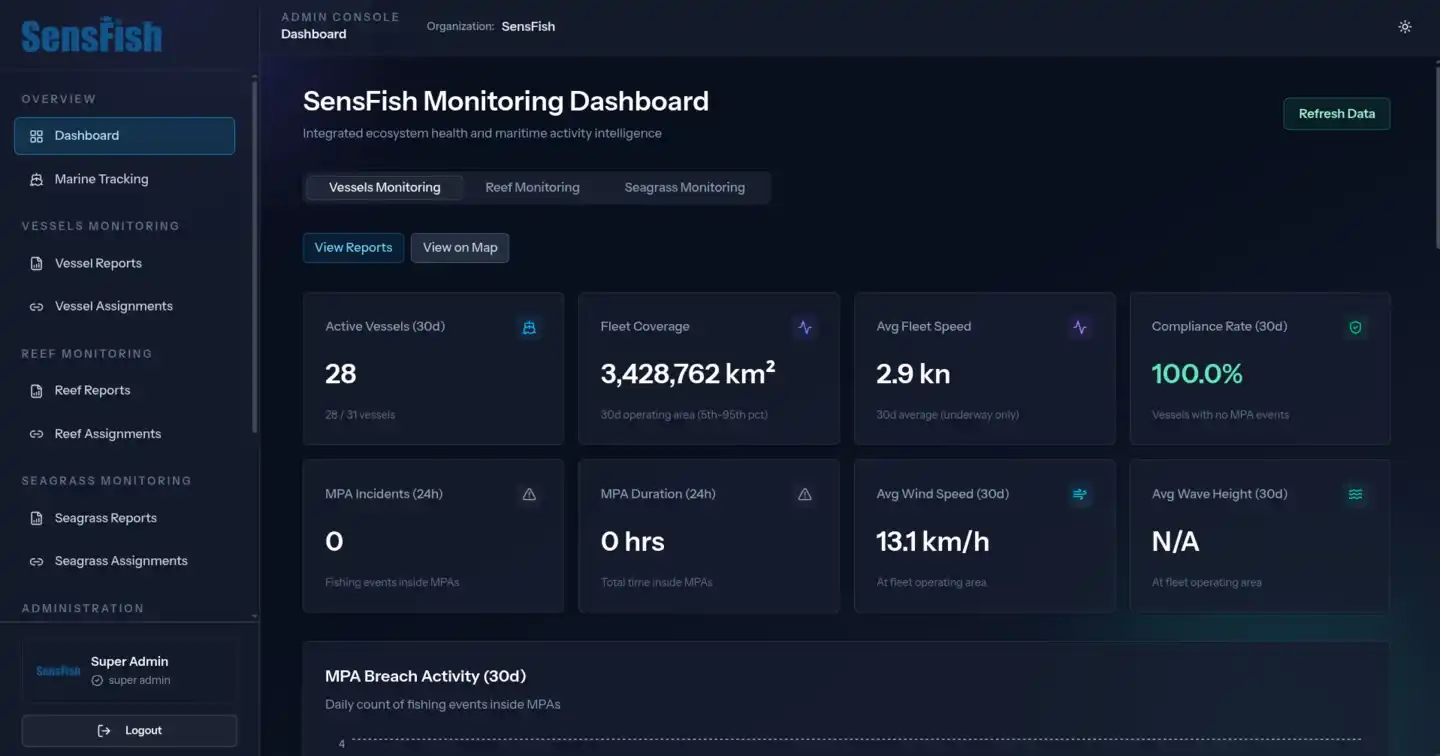
In this project, SensFish led the planning and the development of a scalable restoration intelligence capability integrating satellite Earth Observation, environmental monitoring, vessel activity visibility, biodiversity information, and geospatial analytics within a unified operational interface.
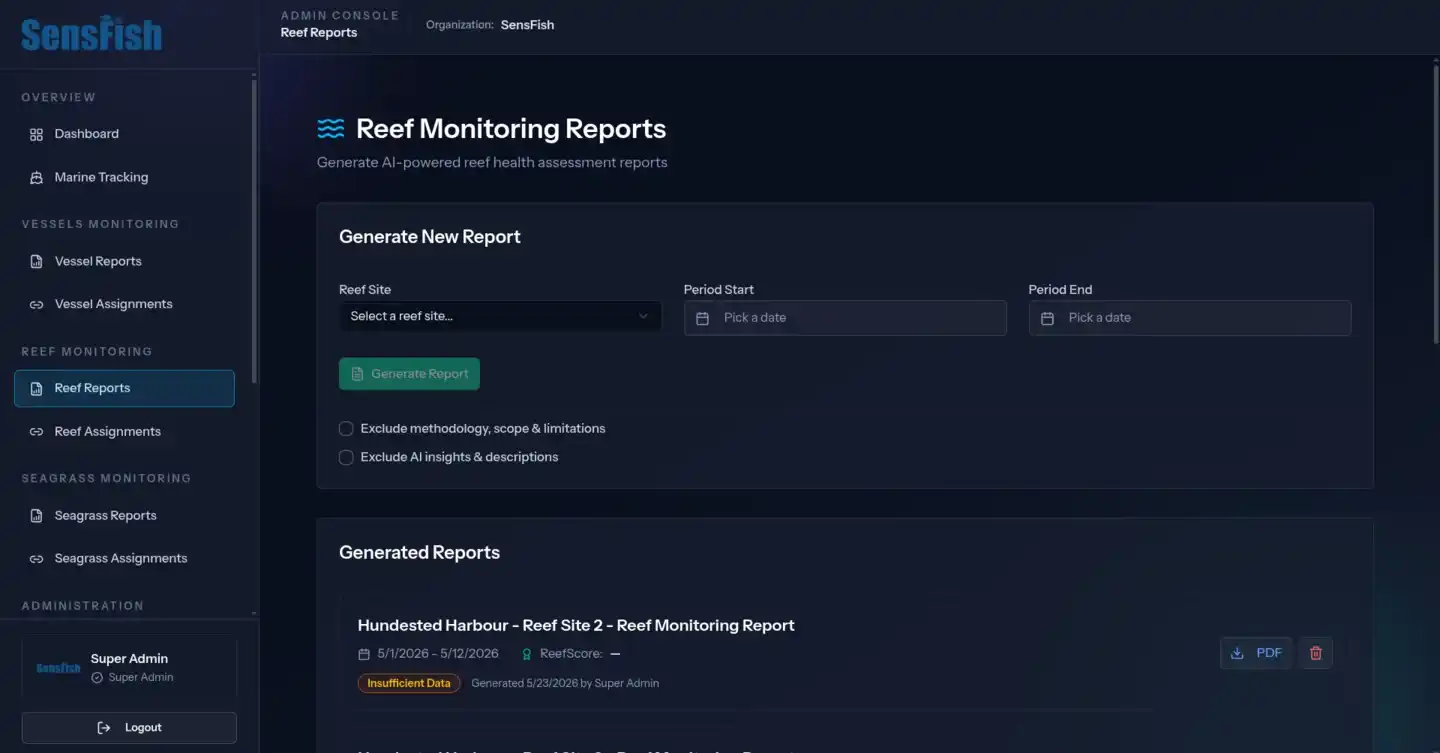
Working alongside the SensFish internal technical and environmental intelligence team, Astro42 contributed to selected engineering and implementation components of the wider SensFish environmental intelligence platform, including aspects of geospatial interface development, dashboard functionality, environmental and vessel activity data integration, and operational reporting workflows.
The project aimed to support more integrated and operationally accessible environmental visibility for marine restoration stakeholders based in Denmark, enabling improved monitoring, environmental reporting, ecosystem assessment, and vessel activity awareness across complex coastal and offshore environments.